
Introduction
For homeowners aiming to create a beautiful outdoor space, maintaining the pristine look and longevity of artificial turf is crucial. Raking artificial grass not only enhances its appearance but also significantly contributes to its durability and functionality. Many homeowners may ask: what are the best practices for raking synthetic grass, and how can common issues be effectively addressed? This guide offers a structured, step-by-step approach to mastering the art of raking artificial turf, ensuring it remains vibrant and inviting for years to come.
Prepare the Artificial Turf Area
-
Clear the Area: Start by walking around the synthetic grass to remove any large debris, such as sticks, leaves, or toys. This initial step is crucial as it prevents potential harm to the grass during the clearing process. Regularly clearing debris not only maintains the aesthetic appeal but also contributes to the longevity of your investment.
-
Inspect for Damage: Conduct a thorough examination of the surface for any signs of wear or damage. Addressing these issues before raking is essential, as it can prevent further complications and ensure the grass remains in optimal condition. Consistent inspections are key to maintaining the quality and appearance of your artificial grass.
-
Rinse if Necessary: If the grass appears particularly dirty, consider rinsing it with a hose to eliminate dust and dirt. This step enhances the effectiveness of learning how to rake artificial turf. Allow the grass to dry completely before proceeding to the next maintenance step, ensuring that the surface is clean and prepared for grooming. Regular rinsing helps maintain a hygienic environment, especially in areas frequented by pets or children.

Gather Necessary Raking Tools
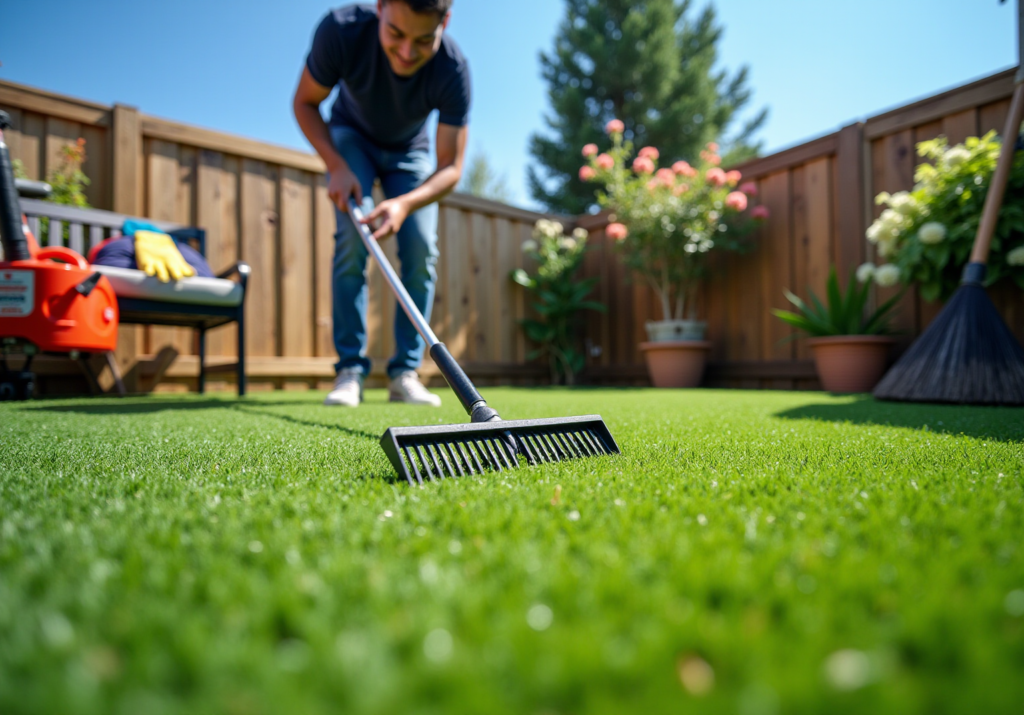
- Choose the right rake, such as a plastic or rubber-tined rake, to understand how to rake artificial turf effectively. Metal rakes should be avoided, as they can damage the fibers of the turf.
- Additional Tools: It is advisable to have a leaf blower or a stiff broom available for the removal of larger debris. These tools can significantly enhance the efficiency of the gathering process.
- Safety Gear: Wearing gloves is essential to protect your hands from blisters and cuts while collecting leaves.

Execute the Raking Process
- To learn how to rake artificial turf, start at one end and rake in the direction of the strands. To avoid pulling up the infill, it’s important to know how to rake artificial turf using gentle, long strokes.
- Concentrate on busy locations and understand how to rake artificial turf in areas that experience higher pedestrian traffic, as these spots may require more thorough gathering to elevate compressed strands.
- Complete with a Brush: After gathering, you can learn how to rake artificial turf by using a stiff broom or brush to fluff up the strands and ensure they stand upright. This step enhances the overall appearance of the grass.

Troubleshoot Common Raking Issues
-
Fibers Not Standing Up: If the fibers remain flat after combing, brush them against the grain to encourage them to stand upright. Regular brushing every three to four weeks can significantly enhance both the appearance and functionality of the grass, providing insights on how to rake artificial turf and potentially extending its lifespan by several years. In fact, adhering to proper brushing schedules can result in a field lifespan of eight years versus twelve years.
-
Debris Stuck in Turf: For stubborn debris, utilize a leaf blower to dislodge it before raking again. This method helps prevent damage to the turf and ensures a thorough cleaning, which is important when learning how to rake artificial turf to maintain the aesthetic appeal of your lawn. Fields that receive consistent grooming tend to retain their condition significantly longer than those that are neglected.
-
Infill Displacement: If you observe that the infill has been displaced during raking, gently redistribute it using a rake or broom to ensure even coverage. Regular monitoring of infill depth is crucial; NFL field managers measure infill depth before every game to maintain optimal playing conditions. Understanding how to rake artificial turf involves keeping the infill evenly distributed, which not only enhances the turf’s appearance but also supports its structural integrity.

Conclusion
Maintaining artificial turf requires a systematic approach to ensure its longevity and aesthetic appeal. Homeowners can effectively care for their synthetic grass by following essential steps, which enhance both durability and visual charm. Key components include proper preparation, tool selection, and the execution of the raking process, all critical for a well-maintained lawn.
Key insights include:
- The importance of clearing debris.
- Inspecting for damage.
- Using the right tools to avoid harm to the turf fibers.
Additionally, understanding how to address common issues such as flat fibers and infill displacement can significantly improve the overall condition of the artificial grass. Regular maintenance practices not only extend the lifespan of the turf but also keep it looking vibrant and inviting.
Ultimately, investing time in the proper care of artificial turf pays off in the form of a beautiful and resilient lawn. Homeowners are encouraged to adopt these best practices and make raking a regular part of their maintenance routine. By doing so, they can enjoy the numerous benefits of artificial grass, ensuring it remains a stunning feature of their outdoor space for years to come.
Frequently Asked Questions
What is the first step in preparing the artificial turf area?
The first step is to clear the area by walking around the synthetic grass to remove any large debris, such as sticks, leaves, or toys. This helps prevent potential harm to the grass during the clearing process.
Why is it important to regularly clear debris from artificial turf?
Regularly clearing debris maintains the aesthetic appeal of the turf and contributes to the longevity of your investment.
What should you do if you find damage during the inspection of the artificial turf?
If you find any signs of wear or damage during your inspection, it is essential to address these issues before raking to prevent further complications and ensure the grass remains in optimal condition.
How can you enhance the cleaning process of artificial turf?
If the grass appears particularly dirty, you can rinse it with a hose to eliminate dust and dirt. This step enhances the effectiveness of maintenance procedures.
What should you do after rinsing the artificial turf?
After rinsing, allow the grass to dry completely before proceeding to the next maintenance step to ensure that the surface is clean and prepared for grooming.
Why is regular rinsing of artificial turf important?
Regular rinsing helps maintain a hygienic environment, especially in areas frequented by pets or children.