Introduction
Maintaining the pristine look and functionality of artificial grass can be a challenging endeavor for homeowners. However, with the right practices, it is possible to extend the lifespan of synthetic lawns while ensuring they remain visually appealing and safe for pets. This article explores essential maintenance techniques, including effective cleaning methods and crucial inspection routines, providing readers with valuable insights into keeping their artificial grass in optimal condition.
Neglecting maintenance can lead to costly repairs or unsightly wear. Therefore, it is vital to understand how to avoid these pitfalls and maintain a beautiful outdoor space for years to come.
Implement Effective Cleaning Techniques for Artificial Grass
To maintain your artificial grass products in optimal condition, start with a routine rinsing using a hose to remove dust, pollen, and debris. Rinsing at least once a week is advisable, especially in high-traffic areas where dirt accumulates more quickly.
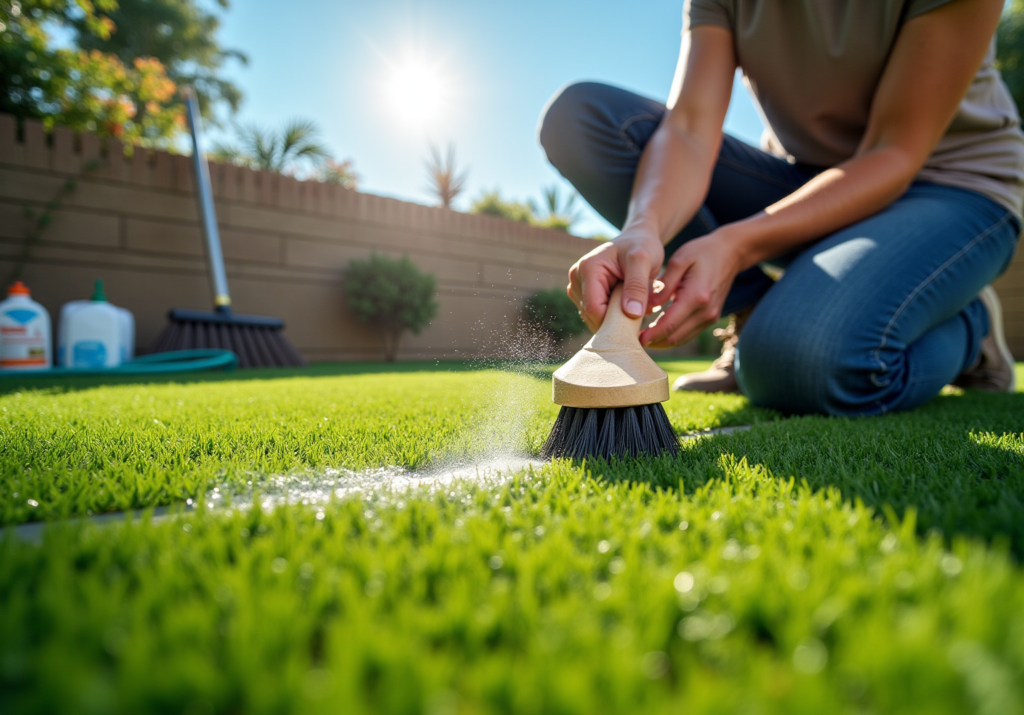
For a more thorough cleaning, utilize a mild soap solution or a turf-safe cleaner. Apply it gently with a soft brush to avoid damaging the fibers. After scrubbing, rinse thoroughly to eliminate any soap residue, as this can attract dirt if left behind.
For stubborn stains, a mixture of equal parts vinegar and water can effectively break down organic matter without harming the grass. It is crucial to avoid harsh chemicals and power washers, as these can compromise the integrity of the grass’s fibers and infill.
Regular cleaning not only preserves the aesthetic appeal of artificial grass products but also extends their lifespan. Incorporating regular deep cleaning every three months and conducting GMAX testing ensures peak performance, potentially extending the lifespan of synthetic grass to 12-15 years or more. By following these best practices, you can maintain a beautiful and functional outdoor space.

Conduct Regular Inspections and Maintenance Checks
Conduct routine inspections of your artificial grass at least once a month to ensure its longevity and performance.
Key Inspection Areas:
- Signs of Wear: Look for flattened fibers or uneven infill distribution.
- Restoring Appearance: Use a stiff broom to brush the grass against the grain, helping restore the upright position of the blades.
- Seams and Edges: Inspect for any lifting or damage, addressing issues promptly to prevent larger problems later.
- Drainage Areas: Pay special attention to ensure they are clear of debris to facilitate proper water runoff. Regular cleaning is essential for preserving appearance and drainage efficiency.
Regular maintenance, particularly infill management, not only enhances the aesthetic appeal but can also prolong the lifespan of your synthetic grass by up to 40%. Therefore, these inspections are an essential part of your turf care routine.

Adopt Pet-Friendly Maintenance Practices
For pet owners, maintaining artificial grass products involves a few straightforward practices that ensure a clean and pleasant environment.
- Regular Waste Removal: Consistently eliminate solid waste to maintain hygiene.
- Dilution of Urine: Rinse the area with liquid to dilute urine, which helps prevent odors and staining.
- Use of Enzymatic Cleaners: Employ a pet-safe enzymatic cleaner, such as Simple Green Outdoor Odor Eliminator, to effectively eliminate odors and bacteria, ensuring the turf remains hygienic.
- Natural Deodorizing Solutions: A simple mixture of vinegar and water can serve as a natural deodorizer, although it may be less effective on strong odors.
- Prompt Cleanup: Timely cleanup is crucial to avoid lingering smells or stains.
- Protective Mats: Position turf-safe mats in busy zones to safeguard the grass and streamline the cleaning process, enhancing the durability and appearance of your synthetic lawn.
The market for artificial grass products, specifically synthetic pet grass, was valued at USD 850 million as of 2022, with a projected CAGR of around 6.5%. This indicates a growing need for efficient maintenance solutions. Staying informed about advancements in odor neutralization technologies and biodegradable materials can further enhance your maintenance practices.

Ensure Proper Drainage Solutions
To ensure proper water flow for synthetic grass, it is essential to routinely check the water management systems located beneath the surface.
- Clear Flow Holes: Ensure that holes for water flow are free of debris.
- Adequate Sloping: The turf should be adequately sloped to promote runoff.
- Examine Removal Systems: If pooled liquid is observed, inspect the removal system for possible obstructions.
In areas that experience significant rainfall, consider implementing additional removal solutions, such as French drains or gravel-filled trenches, to effectively manage excess moisture. Proper water management not only enhances the performance of the grass but also significantly extends its lifespan.
According to Synthetic Grass Warehouse, efficient water management systems can facilitate water flow at a depth of 30 inches per hour per square yard. This capability helps reduce water buildup and minimizes maintenance requirements, contributing to a healthier lawn ecosystem. Landscape architects emphasize that maintaining unobstructed water flow routes is crucial for preventing mold and mildew, which can compromise the integrity of the turf.
By prioritizing these drainage management practices, homeowners can ensure their artificial grass remains functional and visually appealing for years to come.

Conclusion
In conclusion, maintaining artificial grass products at home is crucial for their longevity and aesthetic appeal. Homeowners can ensure a vibrant and functional outdoor space for years to come by adopting effective cleaning techniques, conducting regular inspections, implementing pet-friendly practices, and ensuring proper drainage.
Key practices include:
- Routine rinsing to remove debris.
- Using gentle cleaning solutions for thorough maintenance.
- Regularly checking for signs of wear and drainage efficiency.
Pet owners can also benefit from specific strategies to keep their artificial grass clean and odor-free. This thoughtful maintenance enhances both the beauty and functionality of synthetic lawns.
Incorporating these best practices not only preserves the visual appeal of artificial grass but also contributes to a healthier environment and a more enjoyable outdoor experience. By prioritizing maintenance, homeowners can ensure their investment in artificial grass remains worthwhile, creating a beautiful space that withstands the test of time.
Frequently Asked Questions
How often should I rinse my artificial grass?
It is advisable to rinse your artificial grass at least once a week to remove dust, pollen, and debris, especially in high-traffic areas.
What cleaning solutions are recommended for thorough cleaning of artificial grass?
For a more thorough cleaning, you can use a mild soap solution or a turf-safe cleaner applied gently with a soft brush.
How should I apply cleaning solutions to my artificial grass?
Apply the cleaning solution gently with a soft brush to avoid damaging the grass fibers, and make sure to rinse thoroughly afterward to eliminate any soap residue.
What can I use for stubborn stains on artificial grass?
A mixture of equal parts vinegar and water can effectively break down organic matter and remove stubborn stains without harming the grass.
What cleaning methods should I avoid for artificial grass?
You should avoid using harsh chemicals and power washers, as these can compromise the integrity of the grass’s fibers and infill.
Why is regular cleaning important for artificial grass?
Regular cleaning helps preserve the aesthetic appeal of artificial grass products and extends their lifespan.
How often should I conduct a deep cleaning of my artificial grass?
It is recommended to conduct a regular deep cleaning every three months.
What is GMAX testing, and why is it important?
GMAX testing is a method to ensure peak performance of the synthetic grass, which can potentially extend its lifespan to 12-15 years or more.