
Introduction
Calculating the cost of installing artificial grass can appear daunting. However, understanding the various factors involved can significantly simplify the process. Homeowners have a unique opportunity to transform their outdoor spaces into beautiful, low-maintenance landscapes. Yet, navigating the complexities of material choices, labor expenses, and site preparation can be overwhelming.
What if the key to a successful installation lies not just in the initial outlay, but in a comprehensive understanding of the long-term savings and benefits? This perspective can shift the focus from immediate costs to the overall value that artificial grass can provide.
Identify Key Cost Factors for Artificial Grass Installation
To accurately calculate the cost of installing artificial grass, it is essential to identify the key cost factors involved:
-
Material Costs: The type of artificial grass selected plays a crucial role in determining the price. Premium choices, recognized for their lifelike textures and longevity, generally range from $7.00 to $10.00 per unit area, while economical choices may cost between $1.50 and $4.00 per unit area.
-
Labor Expenses: Installation labor differs according to project intricacy and regional prices, typically ranging from $5 to $10 per unit of area in California. Urban areas may see higher labor costs due to demand and living expenses.
-
Site Preparation: Preparing the site includes eliminating existing grass, flattening the terrain, and incorporating base materials, which can increase costs by $1.50 to $3.00 per unit area. Proper site preparation is vital for ensuring the longevity and performance of the turf.
-
Additional Features: If you intend to include features like drainage systems, which can cost an extra $2 to $8 per unit area, or infill materials, these will also add to the overall expense. Custom designs or patterns may add $5 to $10 per square foot.
By understanding these factors, you can better estimate your budget and avoid unexpected expenses during the installation process, ensuring a successful transition to a beautiful, maintenance-free landscape. To discover top-quality synthetic turf and putting green options customized for your requirements, start your complimentary consultation with California Turf Company today. The estimated cost to install artificial grass in 2026 ranges from $2,725 to $10,000, making it a worthwhile investment for a beautiful, maintenance-free landscape.

Measure Your Space: Calculate Square Footage for Installation
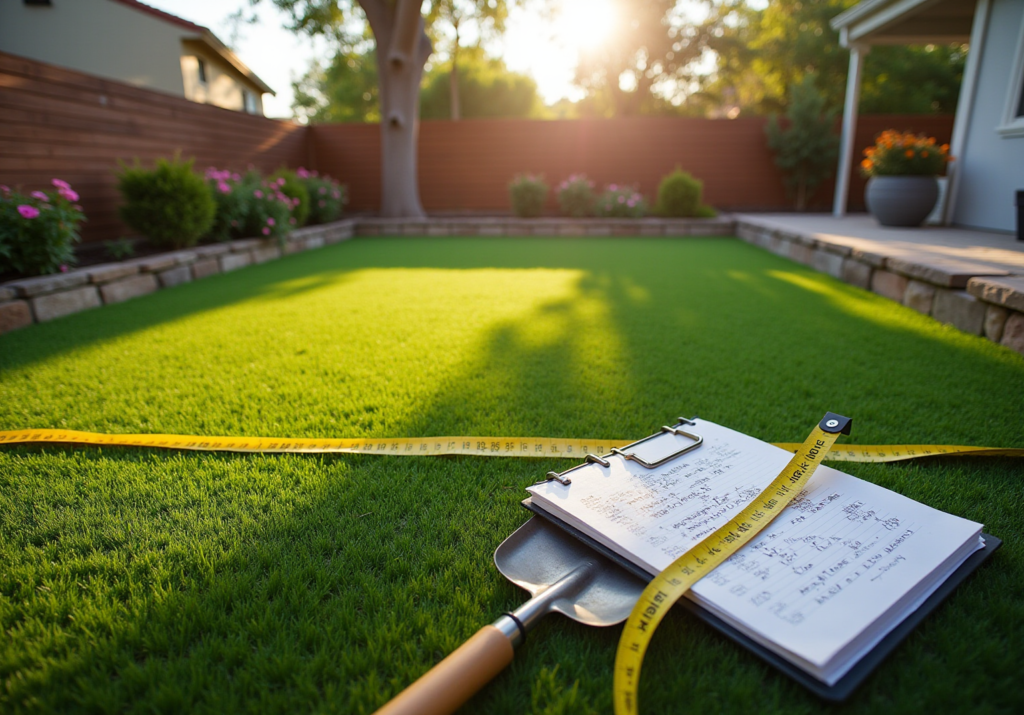
To accurately calculate the square footage for your artificial grass installation, follow these essential steps:
- Gather Tools: Equip yourself with a tape measure, notepad, and pen to document your measurements.
- Measure Length and Width: For rectangular areas, measure the length and width in feet. For irregular shapes, divide the area into smaller rectangles or blocks, measuring each section individually.
- Calculate Area: Multiply the length by the width for each section. For example, if your region measures 20 feet in length and 15 feet in width, the space will be 300 feet (20 x 15 = 300).
- Combine Areas: If your project includes several sections, add their areas to find the total footage needed.
- Consider Waste: It is wise to include an extra 10% to your total footage to allow for waste and cuts during installation. This ensures you have enough material to complete the project without running short.
In Southern California, where the typical residential yard size is about 7,811 square feet, understanding the cost to install artificial grass is essential for homeowners aiming to enhance their outdoor areas. As yard sizes continue to shrink due to evolving housing trends, it’s important to adjust your expectations accordingly. Additionally, ensure that the ground is leveled and consider adding a layer of crushed aggregate for a stable base, which is essential for durability and proper drainage. While DIY installation can be tempting, be aware that it may lead to unexpected challenges. As Francisco Riveroll, General Manager at Realturf USA, suggests, ‘We also advise including 10% extra synthetic turf when you estimate how many area units you’ll require.’ By measuring precisely and taking these elements into account, you can confidently request the correct quantity of synthetic turf, helping to determine the cost to install artificial grass, reducing unnecessary expenses and guaranteeing a successful installation.

Evaluate Different Types of Artificial Grass and Their Costs
When selecting artificial grass, it’s essential to understand the various types and their associated costs:
- Standard Turf: Ranging from $2 to $8 per square foot, this option is ideal for general landscaping and pet areas. It offers a cost-effective solution for homeowners.
- Premium Turf: Priced between $8 to $15 per square foot, this type provides improved durability and a more lifelike appearance. It is suitable for high-traffic areas where both aesthetics and strength are crucial.
- Putting Green Turf: For golf enthusiasts, this specialized turf costs between $15 to $25 per square foot. It mimics the feel of a professional putting green and often includes features like fringe and bunkers, catering to those seeking a top-tier golfing experience at home.
- Specialty Turf: This category includes options designed for playgrounds or sports fields, which may require additional padding or specific infill. Costs can vary significantly based on the specifications and intended use.
By assessing these choices, homeowners can select the type of synthetic turf that fits their budget and intended use, taking into account the cost to install artificial grass, ensuring a rewarding investment in their outdoor spaces.

Understand Installation Costs: Labor and Preparation Expenses
The cost to install artificial grass can vary widely based on several factors. Here’s a detailed breakdown of what to expect:
-
Labor Costs: Labor expenses typically range from $3 to $8 per square foot. This variation is influenced by the complexity of the installation and local market rates. For a standard 1,000 square foot area, this translates to an estimated expense between $3,000 and $8,000.
-
Preparation Costs: Site preparation is essential and may involve removing existing vegetation, leveling the ground, and laying down base materials. This process can add an additional $1 to $3 per square foot to your overall expenses, potentially increasing costs by $1,000 to $3,000 for a 1,000 square foot installation.
-
Additional Features: If your project requires drainage systems or specialized infill materials, these will further elevate the total installation cost. It is advisable to budget an extra $500 to $2,000 for these enhancements, depending on your specific requirements.
Understanding these expenses will help you prepare for the financial commitment associated with the cost to install artificial grass, ensuring you make informed choices throughout the process.

Consider Long-Term Maintenance Costs and Savings
When assessing the long-term costs associated with artificial grass, several key factors come into play:
-
Maintenance Costs: Artificial grass significantly reduces maintenance requirements compared to natural grass. Typical annual maintenance expenses include:
- Brushing: $150/year
- Infill replenishing: $100/year
- Occasional cleaning: $50/year
-
Water Savings: One of the most substantial financial benefits stems from decreased water usage. Homeowners can save hundreds of dollars annually on water bills, particularly in drought-prone regions. For instance, synthetic turf installations can conserve between 500,000 to 1 million gallons of water annually, translating to substantial cost reductions over time.
-
No Fertilizers or Pesticides: Unlike natural turf, synthetic surfaces eliminate the need for fertilizers and pesticides, further contributing to savings.
-
Longevity: High-quality synthetic turf boasts a lifespan of 15 to 25 years, offering a durable solution that can lead to considerable savings compared to the ongoing expenses associated with maintaining natural vegetation. Over 15 years, the total expense for natural turf can increase to tens of thousands of dollars, while synthetic turf typically involves lower overall costs.
By evaluating these factors, it becomes evident that the cost to install artificial grass presents a cost-effective solution in the long run, providing both financial and practical advantages.

Conclusion
Understanding the cost of installing artificial grass requires a comprehensive approach that considers various factors, including material selection and installation expenses. By evaluating these elements, homeowners can make informed decisions that lead to a beautiful and sustainable outdoor space.
Key considerations include:
- Material Costs: The price of the grass itself can vary significantly based on quality and type.
- Labor Expenses: Professional installation may incur additional costs, which should be factored into the budget.
- Site Preparation: Proper preparation of the area is crucial for a successful installation and may involve extra expenses.
- Additional Features: Elements such as drainage systems or decorative borders can enhance the installation but will also affect the overall cost.
Being aware of these factors helps prevent unexpected financial burdens. Furthermore, evaluating the long-term maintenance savings associated with artificial grass-such as reduced water usage and the elimination of fertilizers-highlights its value as a cost-effective investment.
Ultimately, transitioning to artificial grass not only beautifies outdoor environments but also offers lasting financial benefits. By understanding and calculating the various costs involved, homeowners can embrace a maintenance-free lifestyle while enjoying the aesthetic and practical advantages of synthetic turf. This is an opportunity to transform outdoor spaces, and consulting with experts can ensure a successful installation tailored to specific needs.
Frequently Asked Questions
What are the key cost factors for installing artificial grass?
The key cost factors for installing artificial grass include material costs, labor expenses, site preparation, and additional features. Material costs vary based on the type of grass selected, labor expenses depend on project complexity and location, site preparation includes removing existing grass and leveling the terrain, and additional features may include drainage systems or custom designs.
How much do material costs for artificial grass typically range?
Material costs for artificial grass typically range from $1.50 to $4.00 per unit area for economical choices, and from $7.00 to $10.00 per unit area for premium options known for their lifelike textures and longevity.
What are the typical labor expenses for artificial grass installation?
Labor expenses for artificial grass installation typically range from $5 to $10 per unit area in California, with higher costs expected in urban areas due to demand and living expenses.
What is involved in site preparation for artificial grass installation?
Site preparation involves removing existing grass, flattening the terrain, and adding base materials, which can increase costs by $1.50 to $3.00 per unit area. Proper site preparation is essential for the longevity and performance of the turf.
What additional features can increase the cost of artificial grass installation?
Additional features such as drainage systems can cost an extra $2 to $8 per unit area, while infill materials and custom designs may add $5 to $10 per square foot to the overall expense.
How can I calculate the square footage needed for artificial grass installation?
To calculate square footage, gather tools like a tape measure, measure the length and width of the area in feet, multiply these dimensions to find the area for each section, and combine the areas if there are multiple sections. It is also advisable to add an extra 10% to account for waste during installation.
What is the estimated cost range for installing artificial grass in 2026?
The estimated cost to install artificial grass in 2026 ranges from $2,725 to $10,000, making it a worthwhile investment for a maintenance-free landscape.
What should I consider when preparing my yard for artificial grass installation?
When preparing your yard, ensure the ground is leveled, consider adding a layer of crushed aggregate for stability and drainage, and account for the typical residential yard size in Southern California, which is about 7,811 square feet.